Garage door sensor repair in Austin, for the door that changes its mind halfway down
The two little eyes at the bottom of the tracks are the opener's conscience. When they cannot see each other, the door refuses to close, and in Austin they lose sight of each other for reasons that have as much to do with the sun and the dust as with the wiring. Most sensor calls are finished in under an hour.
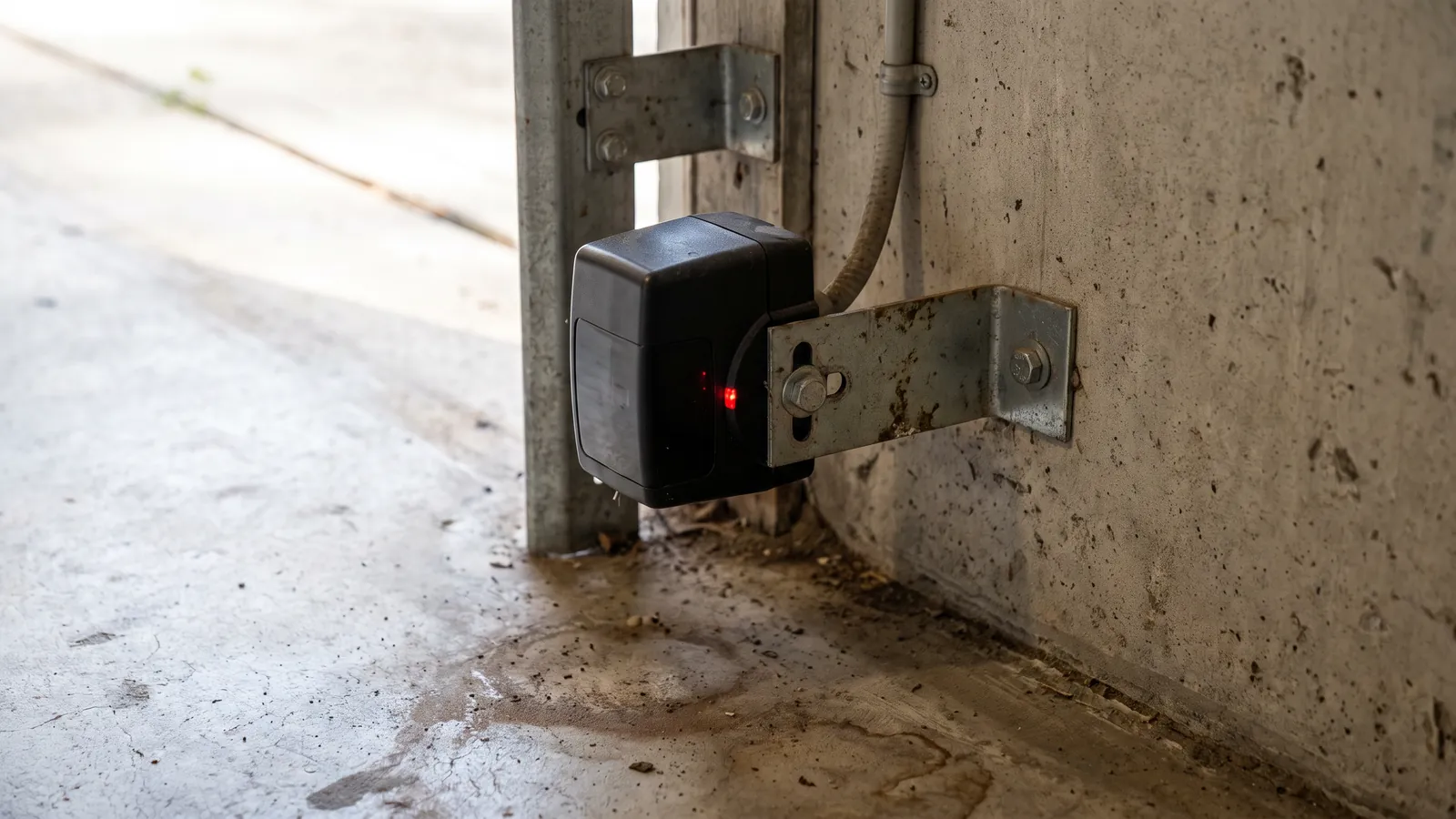
The photo-eye sensors sit about six inches off the floor on each side of the opening, one sending an invisible infrared beam and the other receiving it. Break the beam while the door is closing and the opener stops and reverses, which is the whole point: a child, a dog, a bicycle or a bumper in the way is better than a door on top of it. Federal rules have required this on every residential opener sold since the early 1990s, and an opener will not close the door in its normal mode if the beam is interrupted or the sensors fault. That is why a sensor problem looks like a door problem. You press the button, the door starts down, stops, goes back up, and the light on the motor head flashes at you.
Austin gives these sensors three particular enemies. The first is the low winter sun. From late November through February the afternoon sun sits low enough in the southwest that a west- or southwest-facing garage gets direct light straight into the receiving eye for an hour or so, and the sensor reads the sun as a broken beam. The door works fine in the morning, refuses in the late afternoon, and works again at dusk. A sun shield, a slightly deeper bracket or swapping the sender and receiver sides usually settles it. The second enemy is dust, the fine limestone grit that blows off every construction site and caliche road in the region and settles on the lens. The third is knocks: a trash can, a lawnmower or a tire catches the bracket, the eye tips a few degrees, and the amber light that should be solid starts to blink.
The wiring is the next layer. The sensor leads run along the track, up the wall and across the ceiling to the motor head, stapled every foot or so by whoever installed the opener, and in a garage that has seen a few decades those staples cut through insulation, a mouse chews a run, or the thin bell wire simply corrodes at the terminal. A broken or shorted sensor wire reads as a one- or two-blink code on the opener and the door will not close at all. We trace the run, replace the bad section or the whole pair of leads, and secure them where nothing will bother them again.
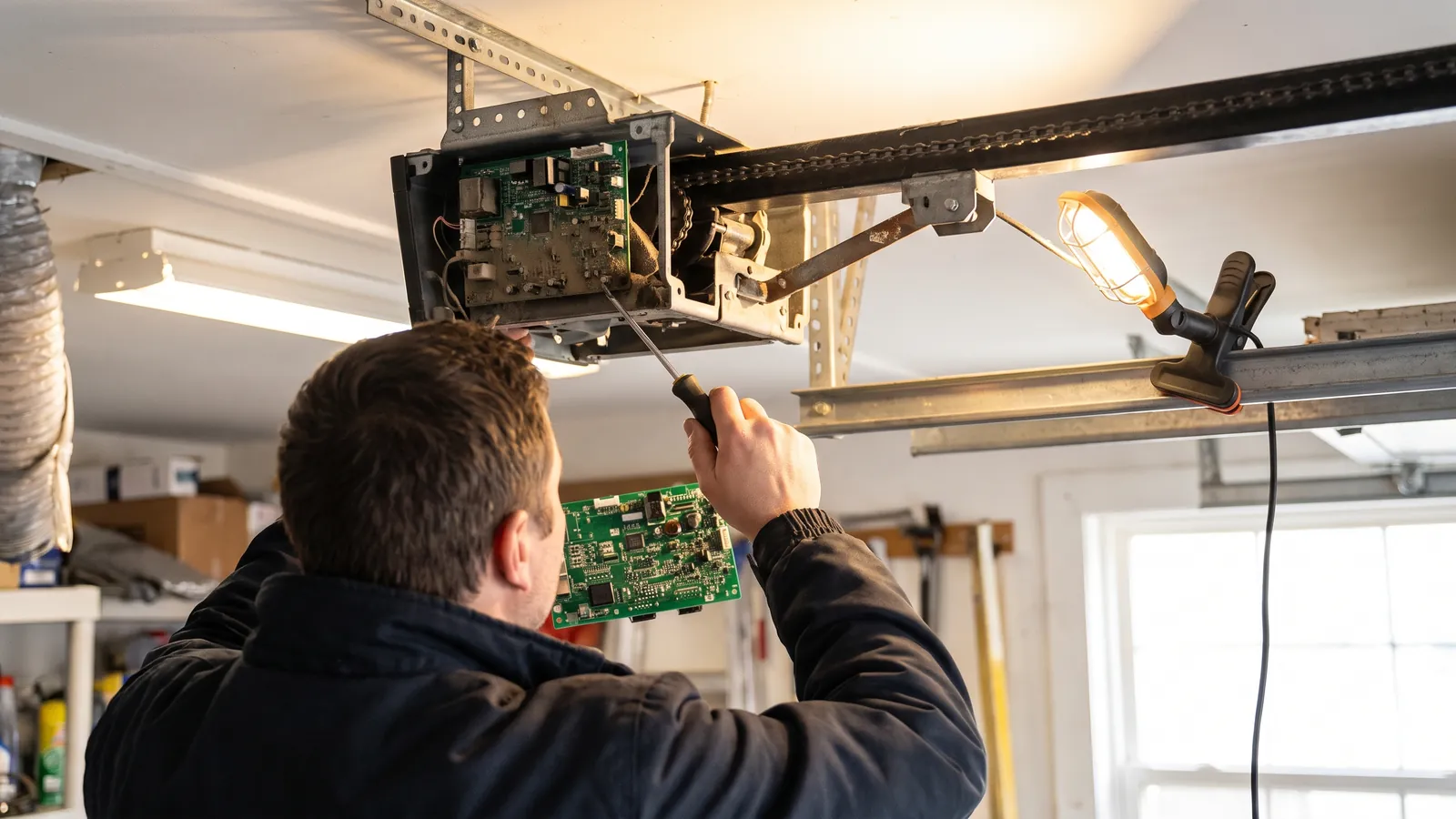
When the eyes themselves have failed, which happens after enough summers of heat in a sealed plastic housing, a new pair is a stocked part for every major opener family. The sensors are matched to the opener, not universal, and the wrong pair will light up and still refuse to talk to the board. Whatever the cause, the visit ends the same way: both lights solid, the door closing cleanly, and the beam tested by waving a hand through it while the door comes down.
What the visit covers
Sun, dust or knock
The three Austin causes checked in order before any wiring is touched, because most sensor faults are a lens, an angle or a glare.
Alignment to the millimetre
Brackets squared, both indicator lights solid, the beam confirmed with the door running down.
Wire runs traced
Sensor leads followed from eye to motor head, cut or chewed sections replaced, staples that pierced the insulation removed.
Sensors matched to the opener
Replacement photo-eyes for LiftMaster, Chamberlain, Genie and the rest, the pair the board expects.
Sun shields where needed
West-facing garages that fail every winter afternoon get a hood or a deeper bracket, not a return visit in January.
Reverse tested
The beam interrupted during a closing cycle, and the block-of-wood contact test run, before we call it done.
Sensor repair cost in Austin, TX
| Work | 2026 range | What moves it |
|---|---|---|
| Trip and diagnosis | $85 – $135 | Credited when we do the repair |
| Realignment and cleaning | $85 – $140 | Often the whole job |
| Sensor pair, replaced | $110 – $220 | Matched to the opener make |
| Wiring run replaced, both sides | $120 – $210 | Includes securing the new leads |
| Sun shield or bracket change | $40 – $90 | Added to a realign visit |
| Wall control replaced | $70 – $130 | When the fault code points there |
| Opener logic board, if the sensor port has failed | $180 – $360 | Rare; tested before it is blamed |
| Travel and force limits reset | $60 – $110 | Usually folded into the visit |
Austin-area figures for 2026, there to help you budget rather than to stand as a quote. The technician measures your door and names the number before any work begins, parts and labour on separate lines; a new door or opener comes with a written price that holds for 30 days.
On the job
Questions about safety sensor repair
The door closes fine in the morning but not in the late afternoon. Why?
Low winter sun hitting the receiving eye on a west- or southwest-facing garage. The sensor reads the glare as a broken beam. A sun shield, a deeper bracket or swapping the sender and receiver sides fixes it.
What do the sensor lights mean?
On most units the sender shows a steady amber light and the receiver a steady green one. A blinking or dark receiver light means the beam is not arriving: misalignment, dirt, glare or a wiring fault, in roughly that order of likelihood.
Can I just hold the wall button to close the door?
Holding the button overrides the sensors and closes the door with nothing watching the opening. It is meant as a one-time workaround, not a way to live. Use it to get the car out, then have the sensors fixed.
Can I bypass the sensors permanently?
No. The opener is built to refuse, and a bypass means the door will not stop for a child or a pet. We will not do it, and a technician who offers to should not be in your garage.
Do I need matching sensors from the same brand?
Yes. Photo-eyes are matched to the opener's board, and a pair from another make will power up and still fail to communicate. We carry the correct pairs for the openers common in Austin.
Could it be the opener and not the sensors?
Occasionally the sensor port on the logic board fails. We test the sensors on a known-good circuit before blaming the board, so you are not sold a board for a dirty lens.