Garage door opener installation in Austin: the quiet motor, the backup battery, and the outlet question
A new opener is the one upgrade that changes how the garage feels every single day. Quieter, faster, with a phone app and a battery that keeps working when the neighbourhood goes dark in a storm. We fit the three main types, set them to the door, and tell you plainly where the electrician's job starts and ours ends.
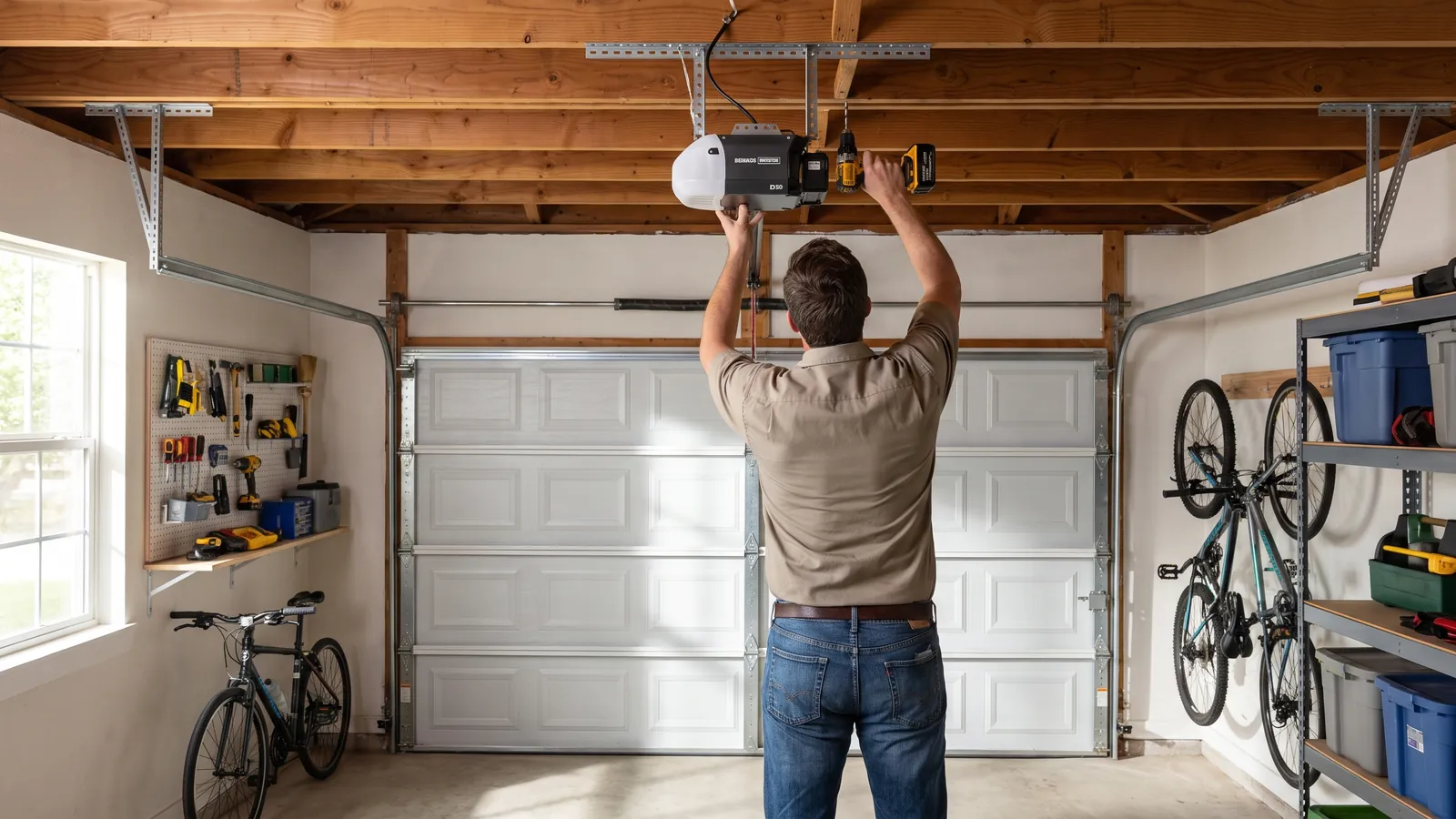
- Belt drive. A steel-reinforced rubber belt in place of a chain. Near silent, which matters when a bedroom sits over the garage, and the choice we fit most often in the newer two-story homes north of the city. Rated motors from half a horsepower up, with a 10-foot rail option for the taller doors on the custom builds out toward the Hill Country.
- Chain drive. The workhorse. Louder, cheaper, tough as a tractor, and perfectly sensible on a detached garage or a shop building where nobody is trying to sleep. Still the right call for a heavy wood door that a belt would struggle with.
- Wall mount, also called jackshaft. Bolts beside the torsion shaft instead of hanging from the ceiling, so the ceiling stays clear for storage racks or a lift. Needs a proper torsion setup and a little extra headroom at the side. The tidiest result, at the highest price.
Whichever you pick, three features are worth insisting on in 2026. A battery backup lets the door open after an outage, and Austin has had enough ice-storm and summer-grid outages in recent years that nobody argues the point any more. Wi-Fi and an app let you check from the office whether you shut the door, and open it for a delivery without handing out a code. And the safety sensors and auto-reverse, which have been required on every new residential opener for decades, get tested with a block of wood before we leave, not assumed.
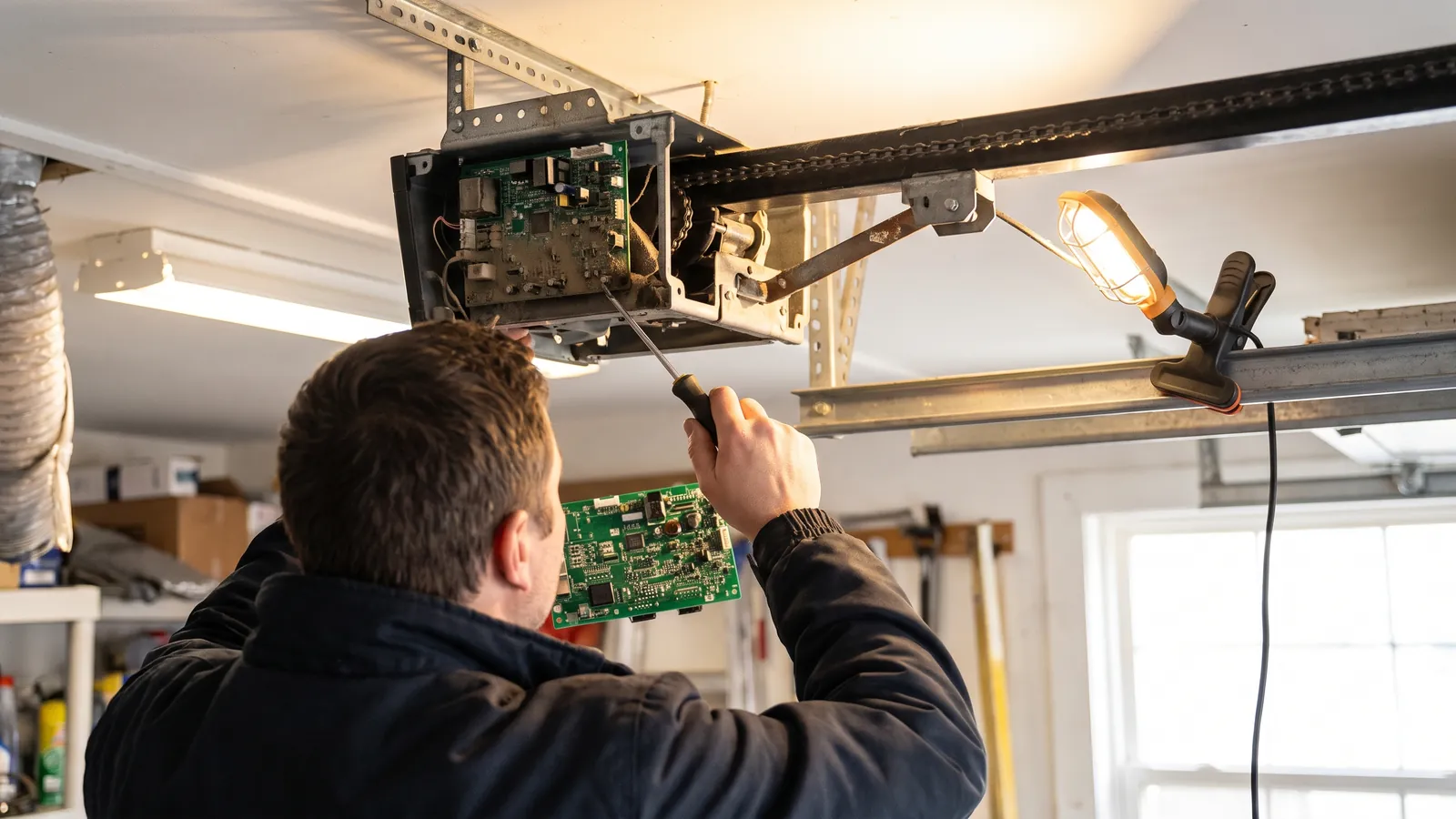
Now the wiring, because this is where honest companies and careless ones part ways. An opener plugs into a standard outlet on the ceiling near the motor head. If that outlet exists, our installation is complete work. If it does not, running a new hard-wired outlet is electrical work, and in Texas that belongs to a licensed electrician, not to a garage door technician with a drill. We will tell you before the visit if a photo of your ceiling suggests the outlet is missing, so you can have an electrician add one first. An extension cord looped through the rafters is not an installation; it is a fire waiting for a reason.
On licensing, the Texas Department of Public Safety has said plainly that someone who only installs garage door openers and the simple accessories that activate them, remotes and keypads, does not need a DPS private security licence. The line is crossed only when the opener ties into an alarm or records who comes and goes. A standard opener with an app does neither. The City of Austin lists replacing or installing an overhead garage door on a one- or two-family home as exempt from a building permit; an opener on its own is not named in that list either way, so if you want certainty, ask Development Services before the day. Most people don't, and we have never seen it asked for.
What the visit covers
Door checked first
Springs, balance, rollers and cables inspected before the opener goes up, because a new motor lifting a badly balanced door strips its gear within a year.
Three drive types
Belt, chain and wall-mount openers in stock sizes, with the 10-foot rail for taller doors when the opening calls for it.
Battery backup and app
Backup battery fitted and tested; the Wi-Fi app set up on your phone before the van leaves the driveway.
The outlet question answered early
If your ceiling has no outlet, you hear it before the visit and a licensed electrician adds one; we never run cords through rafters.
Old unit hauled off
The retired opener, rail and brackets go with us, and the ceiling holes are plugged, not left.
Reverse test and limits
Force and travel set to the door, sensors aimed, and the two-by-four reverse test passed in front of you.
Opener installation cost in Austin, TX, by type
| Work | 2026 range | What moves it |
|---|---|---|
| Chain-drive opener, 1/2 HP, installed | $520 – $780 | Includes removal of the old unit |
| Belt-drive opener with battery backup, installed | $650 – $1,050 | Wi-Fi and app included on current models |
| Wall-mount opener, installed | $900 – $1,450 | Needs torsion springs and side headroom |
| 10-foot rail extension | $90 – $160 | For 8-foot-tall doors |
| Second remote or keypad | $45 – $110 | Programmed before we leave |
| Battery backup added to a compatible existing unit | $140 – $240 | Only on units built to take one |
| Spring rebalance before install | $110 – $190 | Where the door tests heavy |
| New ceiling outlet | Electrician | Licensed electrician's work; we can suggest the timing |
Austin-area figures for 2026, there to help you budget rather than to stand as a quote. The technician measures your door and names the number before any work begins, parts and labour on separate lines; a new door or opener comes with a written price that holds for 30 days.
On the job

Questions about new opener installation
How long does an opener installation take?
Two to three hours on a standard door with an existing outlet, including the removal, the safety sensors, the limit setting and the app. A wall-mount unit or a door that needs rebalancing first runs longer.
Belt or chain?
Belt if anyone sleeps near the garage or you simply dislike noise; chain if the garage is detached or the door is unusually heavy. The belt costs more up front and the gap has narrowed every year.
Will the new opener fit my old door?
Almost always. The rail length is matched to the door height, and the bracket on the top section is reinforced if the door is a lightweight one. A wood door over 250 pounds gets a stronger motor or a chain unit.
Can I keep my old remotes?
Only if they share the new unit's radio generation, which they usually do not. New openers ship with two remotes, and extra ones or a keypad are programmed on the spot.
Do I need an electrician?
Only if there is no outlet on the ceiling within reach of the motor head's cord. We will ask for a photo before the visit. Adding an outlet is electrical work for a licensed electrician in Texas, and we schedule around it.
Does a new opener need a permit in Austin?
The City of Austin's exemption list names replacing or installing an overhead garage door on a one- or two-family home; it does not name openers either way. If you want it in writing, Development Services is the place to ask. We have not seen a homeowner asked to permit an opener.