A garage door off its track in Austin is a door that hasn't fallen yet
When rollers leave the track, the door hangs by its cables on one side and its luck on the other. Stop running it, keep everyone clear, and call. The technician gets it back in, finds what knocked it out, and makes sure it stays where it belongs.
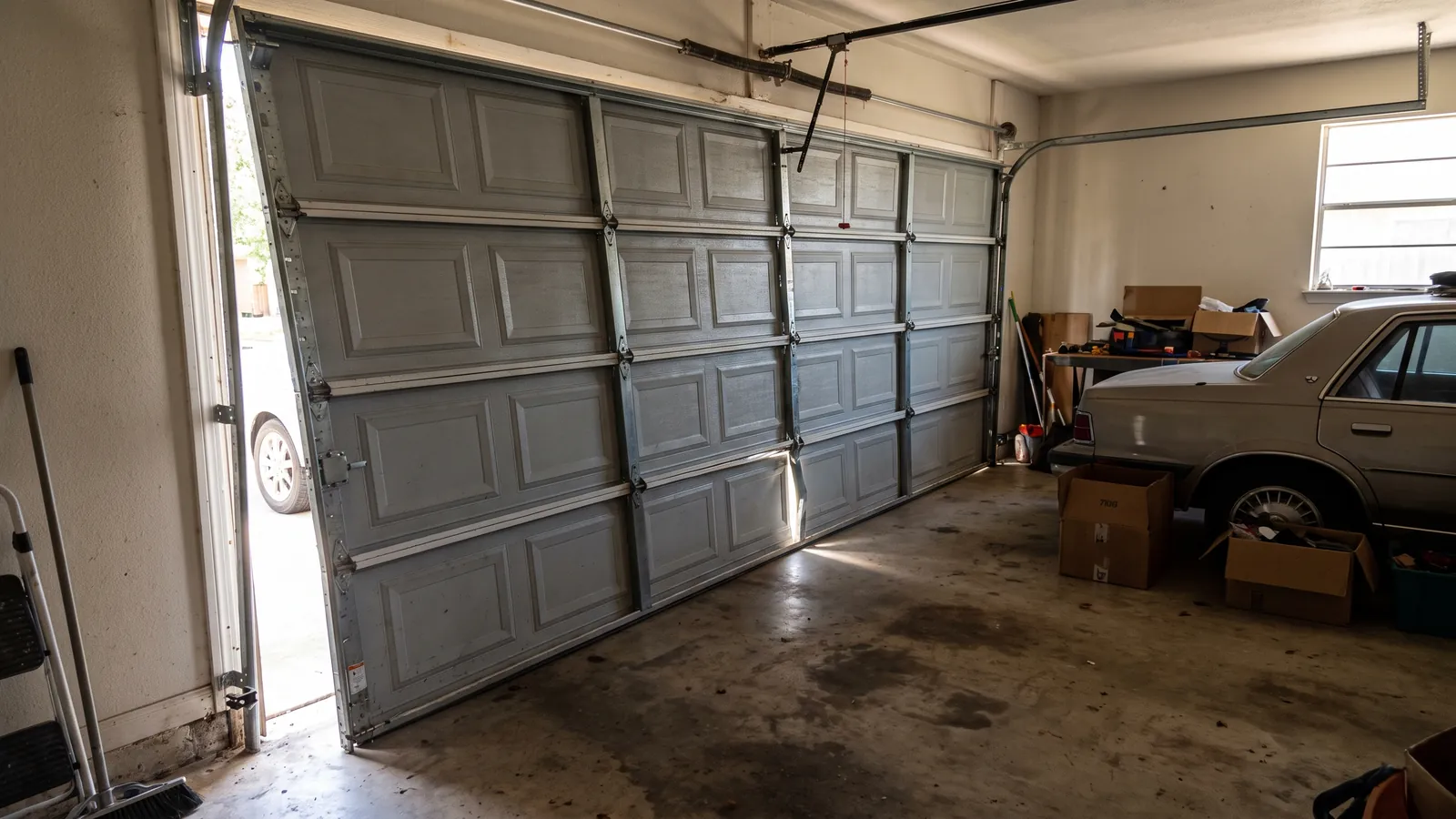
A sectional garage door moves on ten or more rollers, steel or nylon wheels on stems that ride inside a J-shaped steel track on each side of the opening. Hold the rollers in the track and the door behaves. Let one out, and the panel it belongs to is free to swing, the door racks diagonally in the opening, the cable on that side goes slack and loops off its drum, and the whole 200 pounds is now held up by one cable and whatever the lower rollers are still doing. It can jam there. It can also drop, which is why an off-track door is treated as a same-day job and not a weekend one.
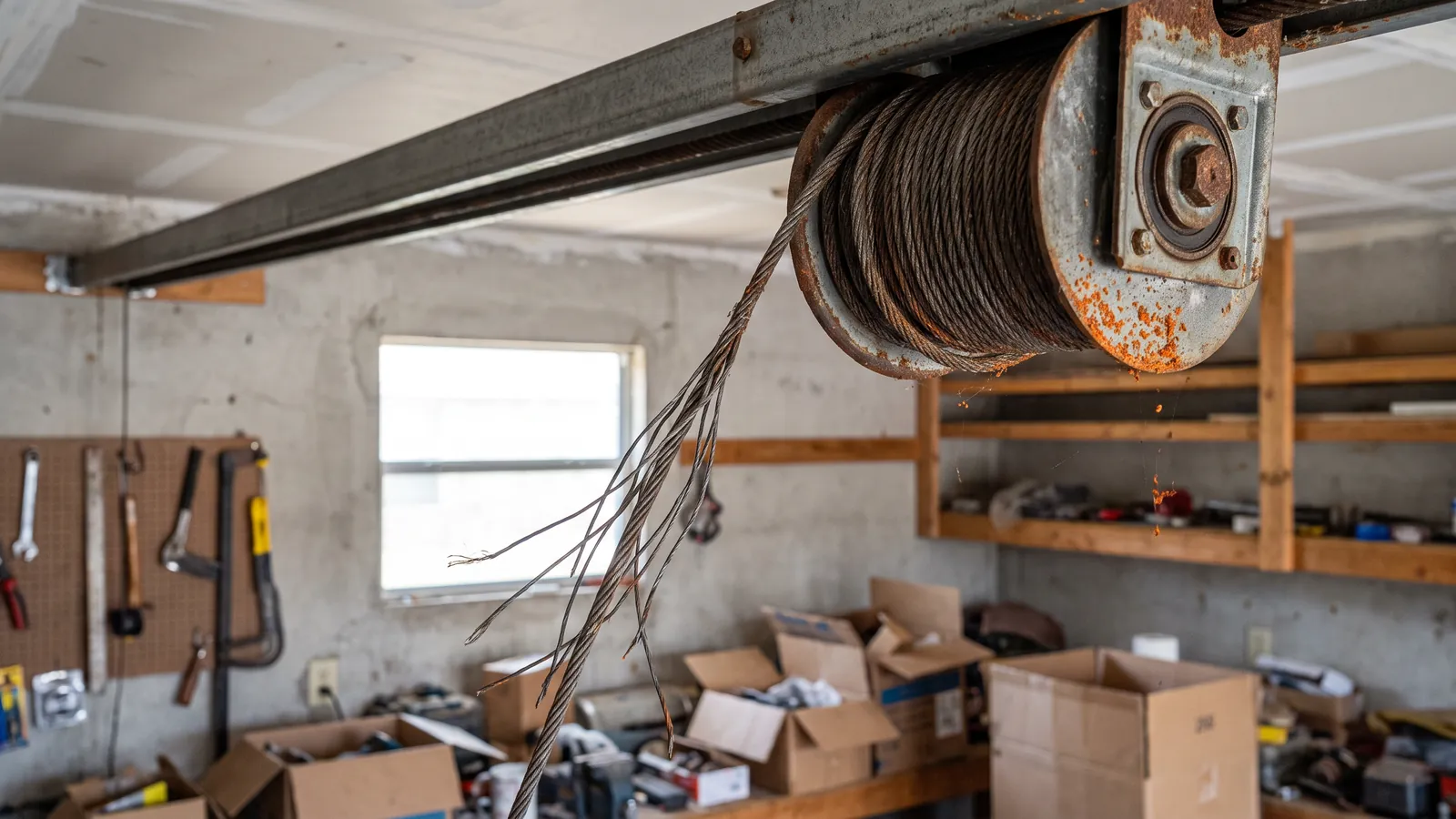
The things that put Austin doors off their tracks are mostly impacts and neglect. A bumper tap on the way into the garage bends the bottom section and pops the bottom rollers out, and a trailer or a boat on a tight driveway does it with more enthusiasm. A trash can, bike or box left in the door's path stops one side while the other keeps moving. A roller that has worn to its stem, common on the original steel rollers in 1990s and 2000s subdivisions from Round Rock to Circle C, simply slips out of the track one day. A cable that snapped or unwound drops one side and racks the door. And a track that was never quite plumb, or was knocked by a shelf going up, lets the rollers climb out at the bend. Finding which one happened matters, because putting the rollers back without fixing the cause means doing it again in a month.
The repair runs in a fixed order. The technician secures the door first, with clamps or a ladder, so it can't fall during the work. The spring tension comes off if a cable has left its drum. The door is squared in the opening, the rollers are walked back into the track, replaced if they're worn or bent, and the track is straightened where the impact kinked it, or a new section of track fitted if the kink is sharp. The cable goes back on the drum, the springs are rewound, and the door is lifted by hand to confirm it runs straight, rises evenly and holds at every height. Then the opener's force and travel settings, which may have been shoving a jammed door, are reset and the reverse test is run. Most of it happens in one visit from parts on the truck: rollers, track sections, cables, hinges and bottom brackets.
A bent or creased panel is the one thing that doesn't always fix itself. A light bow in a steel section can often be worked back; a sharp crease in the bottom section, the one the bumper hit, usually means that panel wants replacing, which is its own page. The technician will tell you which you have and whether the door is worth it.
What the visit covers
Secured before anything else
The door is clamped or propped so it can't fall while rollers are walked back in and cables reset.
Rollers in, worn ones out
Rollers go back into the track; the worn, bent or stem-less ones are replaced, usually with quieter nylon.
Track straightened or swapped
Kinked track is worked back true, and a sharp bend gets a new section, so the rollers stay in on the next cycle.
Cables back on, springs rewound
If a cable left its drum, it's rewound correctly and the spring tension set so the door rises level.
The cause dealt with
Down-force reset, the obstruction removed, the worn roller found: whatever let the door out is fixed in the same visit.
Opener reset and tested
Force and travel limits put back and the two-by-four reverse test run before the truck leaves.
Off-track repair cost in Austin, TX
| Work | 2026 range | What moves it |
|---|---|---|
| Door reset on track, rollers intact | $190 – $320 | The simple version |
| Reset with new nylon rollers, set of ten | $320 – $560 | When the old ones caused it |
| Track section replaced | $120 – $280 per side | Sharp kinks only |
| Cable rewound or replaced during reset | +$80 – $220 | If the cable left the drum |
| Hinges replaced | $30 – $70 each | Cracked or bent |
| Bottom bracket replaced | $60 – $140 | After a bumper strike |
| Bottom section straightened | $90 – $200 | Light bends; creases need a panel |
| Trip and diagnosis | $85 – $135 | Credited against the repair |
Austin-area figures for 2026, there to help you budget rather than to stand as a quote. The technician measures your door and names the number before any work begins, parts and labour on separate lines; a new door or opener comes with a written price that holds for 30 days.
On the job
Questions about off-track repair
The door is crooked but it still moves. Can I keep using it?
No. Every cycle racks the panels and the track a little more, and a door that's half off its track can jam and fall. Leave it where it is, keep the car out from under it, and call. It's a same-day visit.
Will the bent bottom panel go back to straight?
A light bend often will. A sharp crease won't, and a creased bottom section won't seal against the slab. The technician will say which it is and whether a replacement section is still made for your door.
Why did a roller just come out on its own?
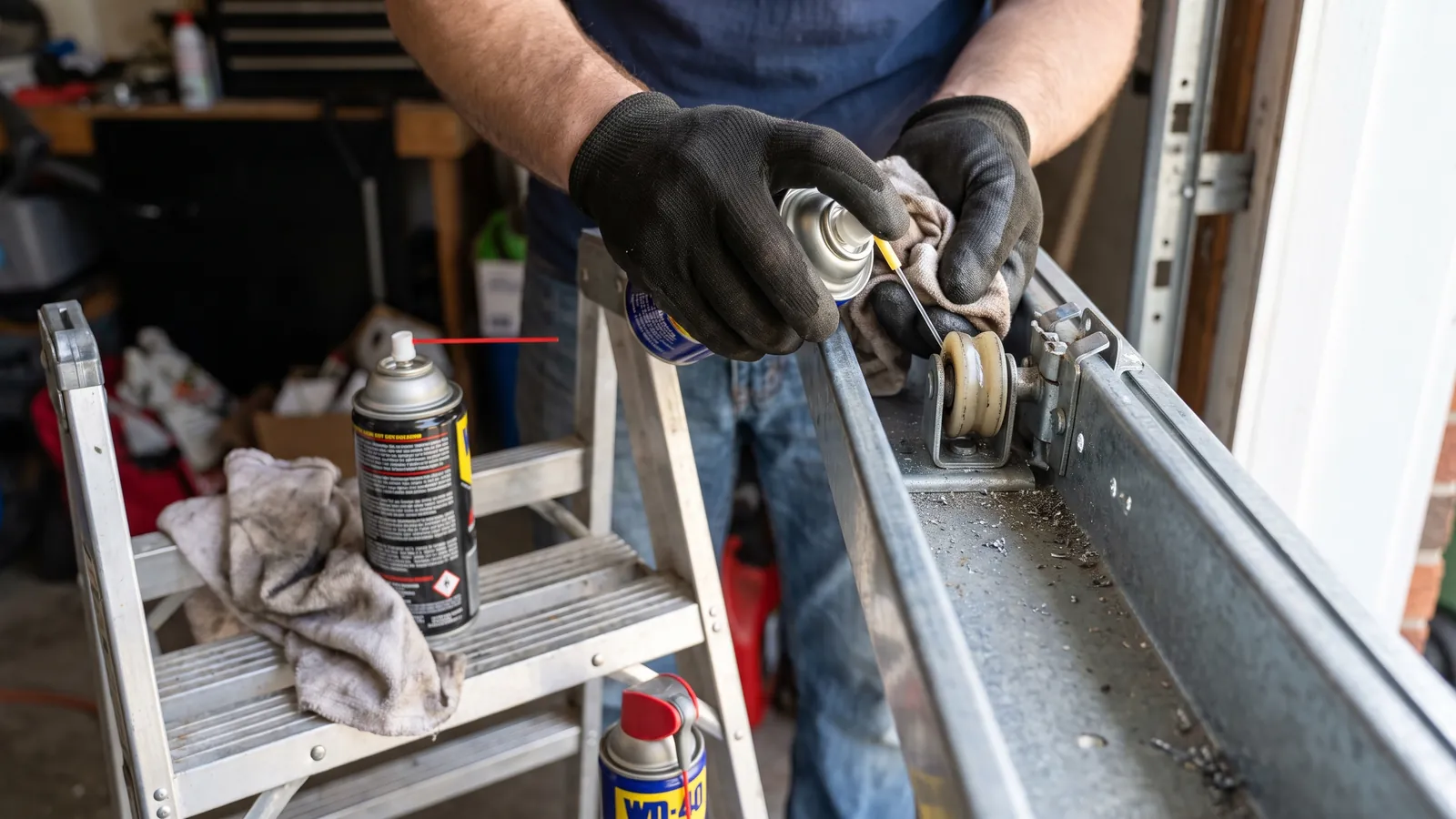
Steel rollers wear their stems and bearings down over fifteen or twenty years, and the original rollers on a lot of Austin-area builder doors are at that age. When one wears enough it slips the track on a normal cycle. New nylon rollers fix that and quiet the door.
Does insurance pay when a car hits the door?
Often, under either the home policy or the car's property-damage cover, less your deductible. We photograph the damage and put the repair in writing for the claim.
Can the opener push a door off its track?
If the door jams and the opener keeps driving, yes, it can rack the door enough to pop rollers. Part of the repair is resetting the opener's force so it stops and reverses instead of pushing.
How do I stop it happening again?
Keep the floor and the path of the door clear, don't stop the door halfway, have the rollers and cables looked at in a yearly tune-up, and pull into the garage a little slower than you think you need to.